

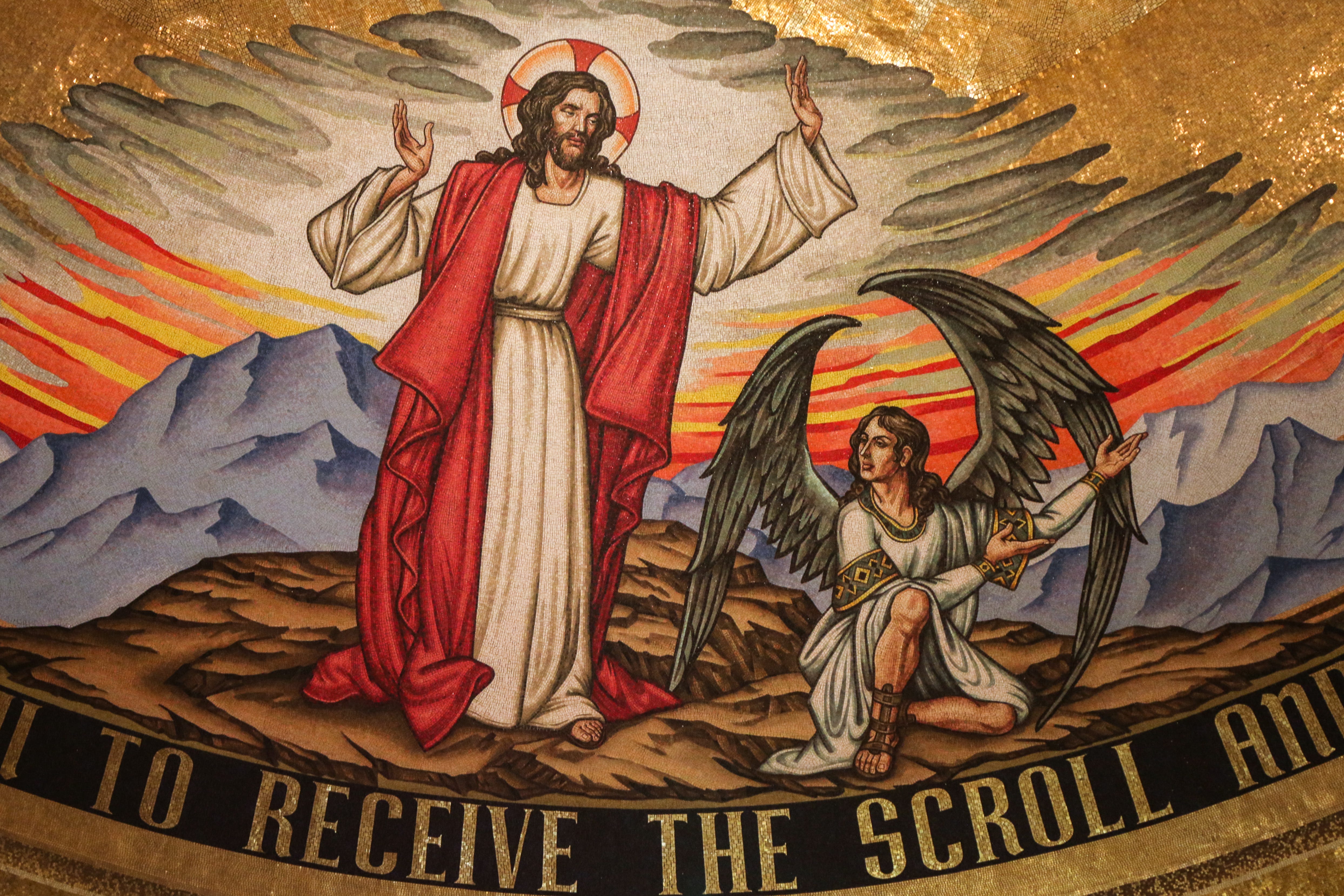
In Fyodor Dostoyevsky’s story “The Grand Inquisitor,” Jesus returns to earth at the time of the Spanish Inquisition.
The Grand Inquisitor confronts a returned Christ. The Inquisitor argues that Jesus fundamentally misunderstood human nature by giving humanity the burden of free will, which they are too weak to bear. The Grand Inquistor argues that humanity would be better off if Jesus hadn’t rejected Satan’s temptations of Miracle, Mystery, and Authority.
For literary critic Edward Wasiolek, it is Christ who is guilty and cruel, and it is the Grand Inquisitor who is kind and innocent. It is Christ who demands that men suffer for Him, whereas the Grand Inquisitor suffers for men."1
3 Temptations of Jesus
Charismatic Christian nationalists2 seek two of the three powers from Jesus’s Temptation — eliminating Mystery & claiming Authority.
Miracle: turn these stones to bread. (see more below)
Mystery: cast yourself down .. God will prove your divinity to humanity lest you dash your foot upon the stone.
Charismatic Christians seek miraculous displays of healing, signs and wonders to prove that their version of Christianity is the right one ( and special)
Authority: Christian Nationalists seek a state religion so that the country has a common worship, under a Christian nation.
The Grand Inquisitor | Dostoyevsky
According to the Inquisitor, there are only three powers on earth capable of conquering the human conscience and providing the happiness of security. These three powers correspond directly to the three temptations of Christ in the wilderness:
1. Miracle (The Temptation of Bread)
The first power is Miracle, which addresses humanity’s base physical needs and their deep desire for something material to worship.
The Concept: The Inquisitor argues that humans care far less about abstract spiritual freedom than they do about physical survival and certainty. If you feed them, they will follow you.
The Example Given: This refers to the first temptation in the desert, where Satan asks Jesus to turn stones into bread. Jesus refused, declaring that “man lives not by bread alone.” * The Inquisitor’s Critique: The Inquisitor calls this a massive mistake. He argues that by refusing to buy mankind’s obedience with bread, Jesus left them starving and confused. The Church, however, chose to accept this power. They give the people bread, and in return, the people gladly surrender their freedom.
2. Mystery (The Temptation of the Pinnacle)
The second power is Mystery, which addresses humanity’s need for absolute, unquestioning faith and a desire to feel that someone else holds the secrets to existence.
The Concept: Human beings do not want the anxiety of choosing what is right or wrong on their own. They want to submit to a mystical, higher authority that tells them what to believe without requiring proof or personal responsibility.
The Example Given: This refers to the temptation where Satan takes Jesus to the pinnacle of the temple and tells Him to cast Himself down, for the angels would catch Him and prove His divinity. Jesus refused, refusing to “tempt the Lord.”
The Inquisitor’s Critique: The Inquisitor argues that humans need miracles and mystery to keep their faith intact. By refusing to show a dazzling, undeniable sign of His power, Jesus demanded a faith that was free and uncoerced. The Inquisitor claims that humans are too weak for that; they need the mystery preserved by a ruling elite to feel safe.
3. Authority (The Temptation of the Kingdoms)
The third power is Authority (or Universal Unity), which addresses mankind’s universal craving for someone to rule over them and unite the world under one banner.
The Concept: The ultimate torment of human beings is the search for someone to bow down to. Furthermore, they desire a common worship—a state where everyone agrees and submits to the exact same ruler, eliminating the conflict caused by differing beliefs.
The Example Given: This refers to the final temptation, where Satan shows Jesus all the kingdoms of the world and offers them to Him if Jesus will bow down and worship him. Jesus rejected worldly power.
The Inquisitor’s Critique: The Inquisitor states that the Church openly admitted to taking what Jesus rejected: the sword of Caesar. By accepting worldly authority, the Church rules over men, takes away the crushing burden of their free will, and gives them a peaceful, managed existence.
In summary: The Grand Inquisitor claims that by rejecting Miracle, Mystery, and Authority, Jesus acted as if He didn’t love humanity at all, demanding too much of them. The Inquisitor’s Church “corrected” His work by utilizing these three forces to make mankind happy, obedient, and captive forever.
QUESTIONS:
After reading the allegory of the spoons in heaven, how close can we get achieving universal “bread?”
Did you remember that the root of the temptation of Jesus throwing himself off the temple (#2) was the temptation for Christ to prove his divinity by a public miracle?
How should one approach people that seek Authority over all the kingdoms of the world (temptation #3)?
ELSEWHERE:
The Grand Inquisitor (pdf), By Fyodor Dostoyevsky, from The Brothers Karamazov (1880, II v 5) Translated from the Russian by Richard Pevear and Larissa Volokhonsky
Spark Notes: Book 5: Pro and Contra, Chapter 5: The Grand Inquisitor, The Brothers Karamazov
25-minute Long form production of “The Grand Inquisitor” from 1975
https://www.flickr.com/photos/paullew/33106633202
FOOTNOTES:
The Notebooks for The Brothers Karamazov ed. and trans. Edward Wasiolek (Chicago 1971). p. 63
I’m especially thinking of the advocates of “7 Mountains” Dominionism, which states that Christians need to dominate the following areas of society:
family,
religion,
education,
media,
arts and entertainment,
business, and
government
It is traced by its proponents to a 1975 origin story involving evangelicals Loren Cunningham and Bill Bright and a “seven spheres” framework for influencing key areas of society. Some later accounts also associate apologist Francis Schaeffer with this origin story; however, he was not present at the 1975 Colorado meeting and is instead linked via later retellings.[7][8] Over time, particularly after the 2000 meeting between Cunningham and Lance Wallnau and the 2013 publication of Invading Babylon: The 7 Mountain Mandate by Wallnau and Bill Johnson, the movement adopted a more dominion-oriented focus, encouraging strategic social and political influence. It has been linked to the New Apostolic Reformation and gained visibility through figures like Paula White and support for Donald Trump, with a 2024 poll indicating that 41% of American Christians believe in 7MM.
The Seven Mountain Mandate is part of dominionism.[16]
The biblical base for the movement is derived from Revelation 17:1–18, wherein verse 9 reads, “And here is the mind which hath wisdom. The seven heads are seven mountains”.[16] The seven areas that the movement believe influence society and that they seek to influence are family, religion, education, media, entertainment, business, and government.[16] They believe that their mission to influence the world through these seven spheres is justified by Isaiah 2:2 “Now it shall come to pass in the latter days that the mountain of the Lord’s house shall be established on the top of the mountains.”[11]
By using strategic spiritual warfare, adherents attempt to gain control of the seven mountains by researching and mapping the geographical strongholds of territorial spirits, using prophecy from the movement’s prophets to determine the demons’ names and roles, and intercession in which they pray on-site to rid the location or “mountain” of demons.[5]
Followers believe that by fulfilling the Seven Mountain Mandate, they can establish the kingdom of God on earth and bring about the end times.[11][5]
After many years with this puzzle, my own views are that this life is a type of distillation, and it is the product of distillation that our creator seeks.
All other human claims that depend on the material must be corruption, for it is simply slowed down energy and so if humans align it follows they must also die with same.