

In Pete Hegseth’s 2024 confirmation hearing, critics highlighted a 2018 email his Mother sent to him during the course of his second divorce, which she said she retracted 2 hours later.
Desired Traits:
Now, when I notice a repeated pattern of “mistakes,” I find myself asking whether these are actual mistakes or whether someone actually stands to benefit? In this case, is the desired behavior inextricably tied to the subject’s character weaknesses? Granted, Pete Hegseth was not selected specifically for his history of, as his own mother said, being “an abuser of women,” but his behavior towards women is closely tied to his pursuit of “domination”, and the President particularly values his bravado, including his “belittling”, “lies”, “twisting” of words, “snark”, “indecency”, and “lack of character.”
The following is the text of the email that Penelope Hegseth sent to her son, Pete Hegseth, on April 30, 2018. One sentence was redacted by The New York Times for privacy reasons.
Son,
I have tried to keep quiet about your character and behavior, but after listening to the way you made Samantha feel today, I cannot stay silent. And as a woman and your mother I feel I must speak out..
You are an abuser of women — that is the ugly truth and I have no respect for any man that belittles, lies, cheats, sleeps around, and uses women for his own power and ego. You are that man (and have been for years) and as your mother, it pains me and embarrasses me to say that, but it is the sad, sad truth.
I am not a saint, far from it.. so don’t throw that in my face, but your abuse over the years to women (dishonesty, sleeping around, betrayal, debasing, belittling) needs to be called out.
Sam is a good mother and a good person (under the circumstances that you created) and I know deep down you know that. For you to try to label her as “unstable” for your own advantage is despicable and abusive. Is there any sense of decency left in you? She did not ask for or deserve any of what has come to her by your hand. Neither did Meredith.
I know you think this is one big competition and that we have taken her side… bunk… we are on the side of good and that is not you. (Go ahead and call me self-righteous, I dont’ care)
Don’t you dare run to her and cry foul that we shared with us… that’s what babies do. It’s time for someone (I wish it was a strong man) to stand up to your abusive behavior and call it out, especially against women
We still love you, but we are broken by your behavior and lack of character. I don’t want to write emails like this and never thought I would. If it damages our relationship further, then so be it, but at least I have said my piece. [Redacted]
And yes, we are praying for you (and you don’t deserve to know how we are praying, so skip the snarky reply)
I don’t want an answer to this… I don’t want to debate with you. You twist and abuse everything I say anyway. But… On behalf of all the women (and I know it’s many) you have abused in some way, I say… get some help and take an honest look at yourself…
Mom
Reformable, but Disqualifying for Serious Leadership
I suppose Mothers can “misspeak” or “miswrite” out of passion. I also suppose those critiqued can reform themselves. But regardless, I question whether a person whose character has sunk so low that it was called out only six years prior, for, among other things, portraying his second wife as “unstable” for purpose of the divorce proceeding, should be elevated into such a serious, high pressure leadership position, let alone one overseeing 2.8 - 2.9 million people.1
This says nothing of Hegseth’s Christian nationalism, which his character issues only compound. But ask yourself — does the president really want a Secretary of Defense who respects the law and treats others with dignity? I expect the President would look to fire a Secretary of Defense who pushed back against unlawful orders, much like he has been attempting to pushing out his Federal Reserve Chairman. Moreover, someone like Hegseth draws the attention and takes the blame for Trump’s policies.
Good Government Isn’t Desired by All
One final reason why misleadership might be desirable is when interests are at odds with the government function. This takes the form of secretaries that called for the abolition of the department they are in charge of, or in the bigger picture, wealthy donors who do not want good government, but want to discredit government so that major tax cuts can be undertaken.
It’s been a long time since “religious voters” called themselves a Moral Majority. Isn’t it ironic that those most zealous about the decay of the nationals morality are those who who struggle most with traditional personal morality.
Moral Majority (Wikipedia)
The origins of the Moral Majority can be traced to 1976 when Baptist minister Jerry Falwell Sr. embarked on a series of "I Love America" rallies across the country to raise awareness of social issues important to him.[1] These rallies were an extension of Falwell's decision to go against the traditional Baptist principle of separating religion and politics, a change of heart Falwell says he had when he perceived what he described as the decay of the nation's morality.[2]
Blackmail-able Leaders
A future article could expand upon this observation:
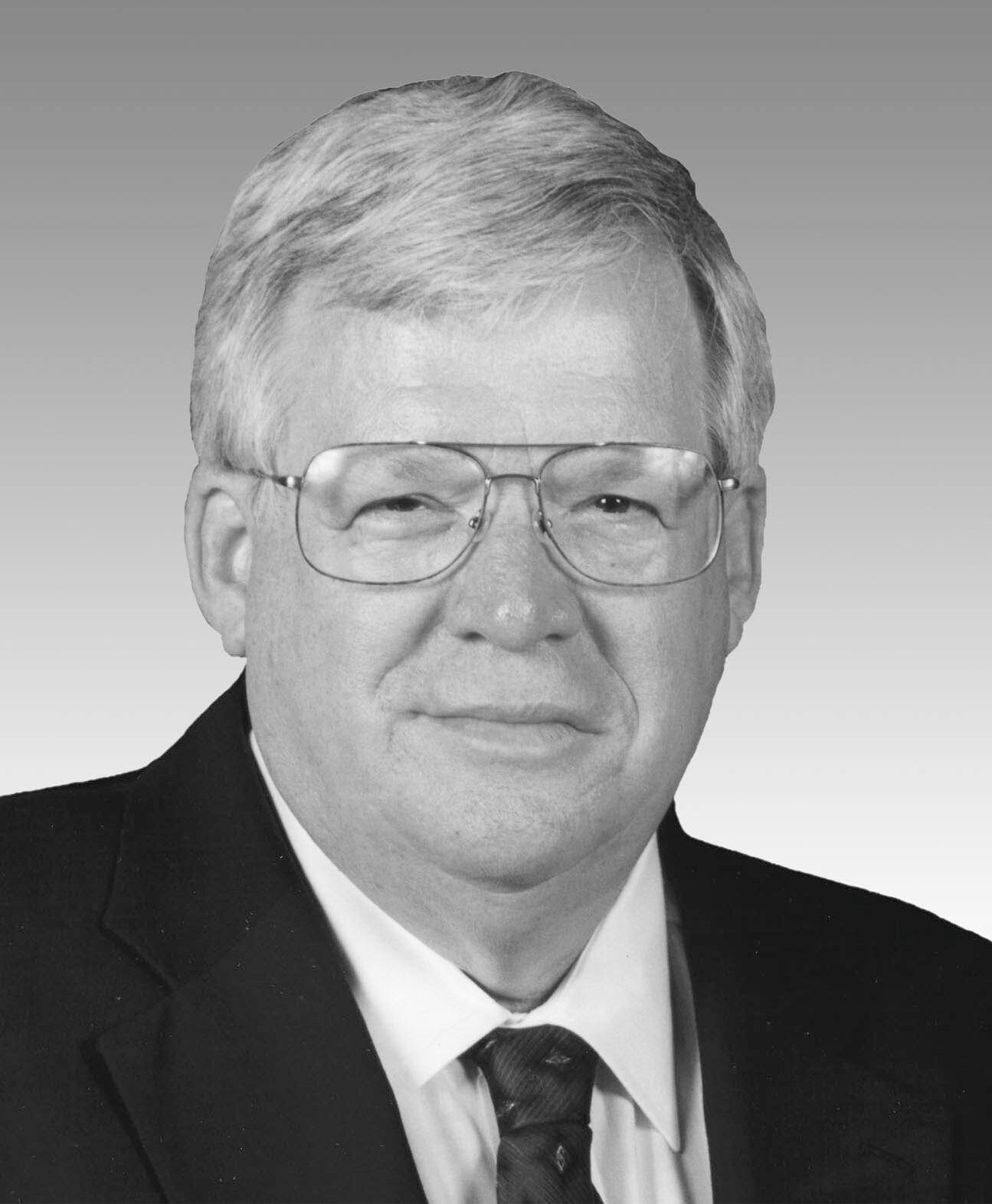
It seems as though having skeletons in one’s background, over which one could be blackmailed about, is actually a qualification for leadership because integrity can be seen by some as a drawback. Blackmail can be effective. It can make “leaders” easier to control.
See Dennis Hastert, the longest serving Republican Speaker of the House and second in line for the presidency | details
Questions:
Have you observed that some people have been selected for their weaknesses?
What lessons can be learned from dysfunctional countries in the “third world” because our own governance is approaching kakistocracy?2
Footnotes
Pete Hegseth didn’t manage more than 200 people before his Secretary of Defense → 2.8 million (Wikipedia)
Pete Hegseth’s management experience varies significantly depending on whether you consider his professional career prior to his cabinet appointment or his current role as the U.S. Secretary of War (formerly Secretary of Defense).
Current Role (Secretary of War)
In his current capacity as the Secretary of War, Hegseth oversees the entire U.S. Department of War (formerly the Department of Defense). This organization is the largest employer in the United States, managing a workforce of nearly 3 million people, including active-duty service members, National Guard and Reserve personnel, and civilian employees.
Previous Professional Experience
Prior to his appointment to the cabinet in January 2025, his leadership roles involved significantly smaller teams:
Military Service: As a National Guard infantry officer, Hegseth’s direct leadership roles included serving as a platoon leader. In the U.S. Army, an infantry platoon typically consists of approximately 30 to 50 soldiers. He also served in various staff positions and as a counterinsurgency instructor, which involved coordinating with other units and training personnel rather than holding large-scale command authority over a massive force.
Nonprofit and Advocacy Organizations: Before joining the government, Hegseth served as the Executive Director of Vets for Freedom (2007–2012) and the CEO of Concerned Veterans for America (2012–2015). While these organizations had large memberships and donor bases, their internal staff sizes were relatively small compared to government agencies or large corporations, typically numbering in the dozens to low hundreds.
In summary, while his military and advocacy roles involved leading teams ranging from dozens to hundreds of people, his current cabinet position represents a massive scale of management over nearly 3 million personnel.
During the period of the French Revolution, the term was used by detractors of Robespierre‘s government; Abraham Gotthelf Kästner did it in 1800.[7] Italian author Vittorio Alfieri used the word “kakistocrazia” (kakistocracy) in 1797, as a sarcastic distortion of “aristocracy“.
English author Thomas Love Peacock used the term in his 1829 novel The Misfortunes of Elphin, in which he explains that kakistocracy represents the opposite of aristocracy, as aristos (ἄριστος) means "excellent" in Greek (Wikipedia)