

This is an older story: Aug 27, 2025
Israel has killed over 200 journalists in Gaza. Some of those journalists worked for western media outlets who faileded to speak out against their killing. Some, like Reuters, distanced themselves by labeling their own camera a “Hamas Journalist.”
If I can’t count on Reuters to cover the killing of their own staff, how can I count on Reuters to cover other stories independently when powerful interests are lobbying them heavily?
Katie is joined by Palestinian journalist Laila Al-Arian to discuss Israel's ongoing murderous campaign against Palestinian journalists and the complicity of Western leaders and journalists.
She tweeted, “I can’t believe these are real headlines. Israel bombed a hospital twice, killing journalists and rescue workers on video for everyone to see.”
12:39 And Western media tries to justify it by saying they were targeting a Hamas camera. This is not journalism. It’s embarrassing. And then you see, let’s
12:47 just click through some of them. So the AP, Israeli military says strikes on Gaza hospital targeted what it says was the Hamas camera. Reuters initial
12:54 inquiry says Hamas camera was targeted of Israeli strike that killed journalists. Next, CNN IDF’s initial inquiry into Gaza hospital strike claims
13:02 troops identified Hamas camera. And then Sky News. Gaza latest. Israel claims troops saw Hamas camera before deadly hospital attack. And again, just imagine
13:10 if this was a Russian thing. Imagine any any comparable headlines, right?
13:15 Absolutely. I I share your outrage and I wish everyone was as outraged. Can we also just take a step back and acknowledge the fact that the first
13:24 journalist killed in that strike was a Reuters journalist. He was working for them and they’re helping to cover up the
13:32 killing of their own journalists. Miam Abu Daka, 33 years old, was working for the Associated Press. The Associated Press minimizes her role with them by
13:41 calling her a freelancer. Doesn’t even put her name in a headline. I mean, to your point, everybody should know these
13:47 names. But part of dehumanization is to gloss over these atrocities, is to
13:54 minimize them, is to whitewash them, is to help Israel justify and rationalize them. and the fact that we know so little about all of these journalists.
14:05 They were somebody’s entire universe.
14:08 Anal Sharif was only 28 years old. He had so many opportunities to leave Gaza.
14:13 In fact, his own family after he was killed said that he was told a few days before he was killed, “We can help you
14:22 leave Gaza. Just stop reporting.” And he refused. That is heroic. That is the pinnacle of what you would consider a
14:30 journalist of integrity, of professional commitment, of courage and bravery. Um,
14:36 Miam Abu Daka had been separated from her 12-year-old son for a year and a half before she was killed. All of these
14:43 journalists have written wills to their loved ones, to their colleagues, last statements and last words. The fact that
14:51 all of them have taken the time to actually write their last will and testament, the words that they wish to be remembered by, tells you everything
15:00 about this killing campaign that Israel has unleashed on the journalists of Gaza.
15:06 I just want to say that these are the most incredible, devoted,
15:11 caring, generous people that you can imagine. They’re all they want to do is bear witness and tell
15:19 the story and continue the coverage because to them it’s a mission that’s intrinsic to who they are regardless of
15:27 the sacrifice. They’re doing all of this. They’re covering everything happening in Gaza while suffering the same thing. They’ve been depaced,
15:36 displaced from their homes so many times, having to sleep in tents. They’ve been starved. They’ve been injured.
15:43 They’ve lost loved ones. separated from their family members.
15:48 They have no offices, no equipment. And we’re not talking about a few months.
15:53 This has been going on for almost two years. And you know, their professionalism has been sort of impuged
16:02 or questioned whether they’re actually journalists. And in fact, in my experience, they’re so much more
16:08. professional than some of the journalism that you see in these legacy newspapers that actually turns out to have been completely debunked. And I’m thinking
16:16 specifically of some of the October 7th atrocity propaganda that helped lead us to this moment. And just to give you one small example, when we were working on
16:25 the night won’t end, I was in touch with a journalist in Gaza who thankfully is still alive. I very much, you know, pray for his safety because nobody is safe.
16:34 this journalist has said, “We feel that these are our last days.” And the fact that they could just say that says so much. But we were talking about covering
16:42 a case of a field execution because we’d heard that Israeli soldiers were actually going into Palestinian homes in Gaza, separating the men from the women
16:51 and children, and then executing the men in front of the women and children or sometimes executing the women depending
16:57 on the different cases. and he had heard about a case and went to go cover it,
17:02 but we asked him about who the eyewitnesses were and he said, “Well,
17:06 there was one neighbor who heard but didn’t see anything, so I didn’t interview him.” Imagine if these in
17:12 these legacy media, legacy newsrooms, if they had that level of professionalism in terms of what actually counts for
17:20 serious journalism in pursuit of the truth and facts and not just regurgitating propaganda
17:28 given to you by a state that’s accused of genocide.
Chapter 7: Remembering the lives of journalists martyred on Monday Aug 25 by Israel
17:30 We have photos of some of the uh intrepid journalists who were killed and I do want to show their images because I think that’s important. Ham al- Masri
17:38 was the Reuters journalist who was the first person killed. Miam Abu Daka is the journalist I mentioned who’s 33
17:45 years old who left behind a 12-year-old son. She worked for the Associated Press. Muaz Abu Taha was a freelance
17:53 journalist who worked with several news organizations and this is really important. just days before he was killed, worked on an incredible piece
18:01 that 972 magazine did about starvation in Gaza, which makes you think this this is not accidental. These people are
18:08 targeted. Muhammad Salama was my colleague at Al Jazzer, incredible journalist. He refused to leave Nasid
18:17 Hospital complex. He stayed there until the end and he documented so many atrocities there. And when they kill
18:24 these journalists, they not only kill the eyes and ears and they not only stop the coverage, which I think is the
18:31 intention, they also kill the the memory because these journalists should have been present and were crimes
18:38 investigations to testify. They were eyewitnesses to crimes that they themselves reported and authented
18:46 and now they’re gone. And I think that’s part of the intention here in silencing them is silencing eyewitnesses.
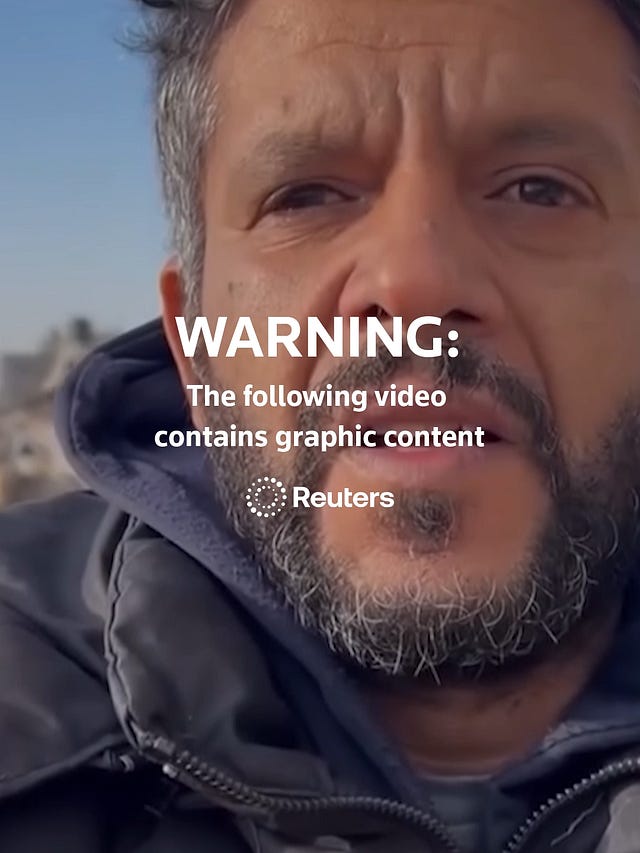
Hussam al- Masri was the Reuters journalist
 Tiktok failed to load.
Enable 3rd party cookies or use another browser
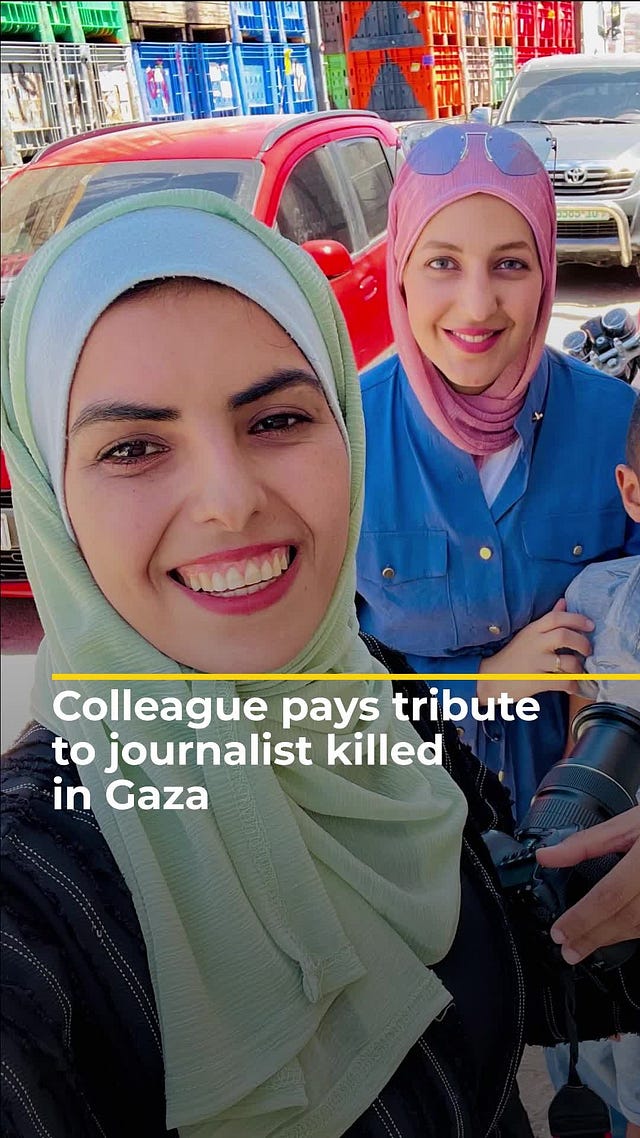
Miam Abu Daka, 33 years old, was working for the Associated Press
 Tiktok failed to load.
Enable 3rd party cookies or use another browser
Laila Al-Arian is a Washington DC-based investigative journalist and the executive producer of Fault Lines, a current affairs and documentary program on Al Jazeera English. For her work, she has been honored with two News and Documentary Emmys, a Peabody Award and George Polk award. She is the co-author of “Collateral Damage: America’s War Against Iraqi Civilians.”
More Background: Kevin Gosztola