

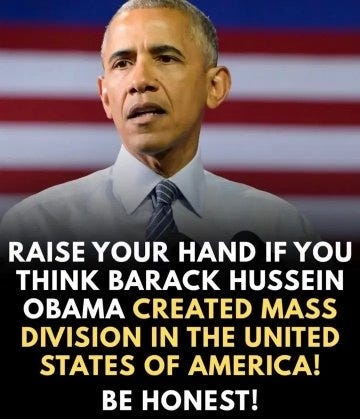
GEMINI:
Why do some Conservatives say Obama was a Divisive President?
When Conservatives label Barack Obama’s presidency as “divisive,” they are generally pointing to a combination of his administration’s policy decisions, his rhetorical approach, and the shifting social dynamics of his time in office. While he campaigned heavily on a message of national unity (”There’s not a liberal America and a conservative America; there’s the United States of America”), critics argue that his actions once in office led to deeper polarization.
Conservative arguments regarding his divisiveness typically focus on a few key areas:
1. The Passage of the Affordable Care Act (Obamacare)
For many conservatives, the passage of the 2010 healthcare law is the ultimate example of partisan division.
Pew Research Center
Unlike other major, sweeping pieces of social legislation in U.S. history (like Social Security or Medicare), which received significant bipartisan support, the Affordable Care Act was passed using a complex legislative maneuver (budget reconciliation) with entirely Democratic votes.
Conservatives argued that “ramming through” a law that fundamentally reshaped one-sixth of the American economy without Republican buy-in set a hostile, highly partisan tone for the rest of his presidency. (The American Prospect)
2. Identity Politics and Rhetoric on Race
While Obama’s election was seen by many as a historic milestone for racial progress, conservatives argue that his administration’s rhetoric ultimately frayed race relations.
Critics contend that the administration leaned heavily into “identity politics,” which they believe divides Americans into competing demographic groups rather than uniting them under a shared national identity. (The Heritage Foundation)
Conservatives frequently point to instances where the President weighed in on local law enforcement incidents before full investigations were complete—such as the 2009 arrest of Harvard Professor Henry Louis Gates Jr. or the 2012 shooting of Trayvon Martin—arguing that his commentary prematurely inflamed racial tensions and vilified law enforcement.
3. “Class Warfare” and Economic Rhetoric
On economic policy, conservatives felt Obama’s rhetoric pitted different socioeconomic brackets against one another. His frequent calls for the wealthy to pay their “fair share” and comments during his 2012 re-election campaign were viewed by critics as “class warfare.” From the conservative perspective, this demonized job creators, entrepreneurs, and successful Americans to score political points, rather than fostering economic unity.
4. Executive Overreach and the “Pen and Phone” Approach
When Republicans took control of the House of Representatives in 2010 and the Senate in 2014, legislative gridlock ensued. In response, President Obama famously stated he would use his “pen and a phone” to enact policy through executive orders and agency regulations when Congress refused to act. (The Heritage Foundation)
Conservatives viewed this as a blatant bypass of the constitutional legislative process.
Actions like DACA (Deferred Action for Childhood Arrivals) and strict new EPA regulations were seen as unilateral edicts that completely ignored the millions of Americans represented by the Republican majority in Congress.
5. Cultural and Social Shifts
The Obama era coincided with rapid shifts in cultural norms, particularly regarding LGBTQ+ rights, culminating in the legalization of same-sex marriage. Conservatives, particularly social conservatives, felt that the administration used the cultural leverage of the federal government to aggressively push progressive social views, leaving traditionalists and religious conservatives feeling sidelined, alienated, and culturally villainized. (Pew Research Center)
In short, while progressives often viewed these same actions as necessary progress in the face of historic congressional obstruction, conservatives saw an administration that they believed consistently chose a progressive ideological agenda over genuine bipartisan consensus, thereby deepening the nation’s political fractures.
QUESTIONS:
Do you accept that Obama did not govern as a uniter, as he campaigned?
Are there a less divisive policy alternatives to “identity politics”?
What lessons should Democrats learn about dealing with police scandal, while minimizing division?
How should Democrats address economic stratification, while avoiding polarization? (And knowing that there are wealthy interests that will play victim to avoid the issues)
Do executive orders risk divisiveness by functioning as “unilateral edicts?”
COMMENTS
Absolutely, 8 years of pushing racial division, pushing get rid of police, bringing in thousands of absolutely worthless Somalians, and then pulls the TREASONOUS move of acting as a shadow president while Biden was in office
Well he was right I cling to my religion in tough times. Unfortunately he said it with disdain. I say it with pride. So yeah there is that.
It was always their intention to pit the races against each other…divide and conquer…one of the oldest strategies in the world to control the population…keep us from being united as Americans against the evil, corrupt, treasonous, lying Marxist, socialist, and communist DemonRats trying to “fundamentally change” America.